Bed bug heat and chemical remediation in Birmingham, AL establishes definitive territory control against persistent infestations in historic and modern homes. Thermal remediation uses industrial heaters and axial air…
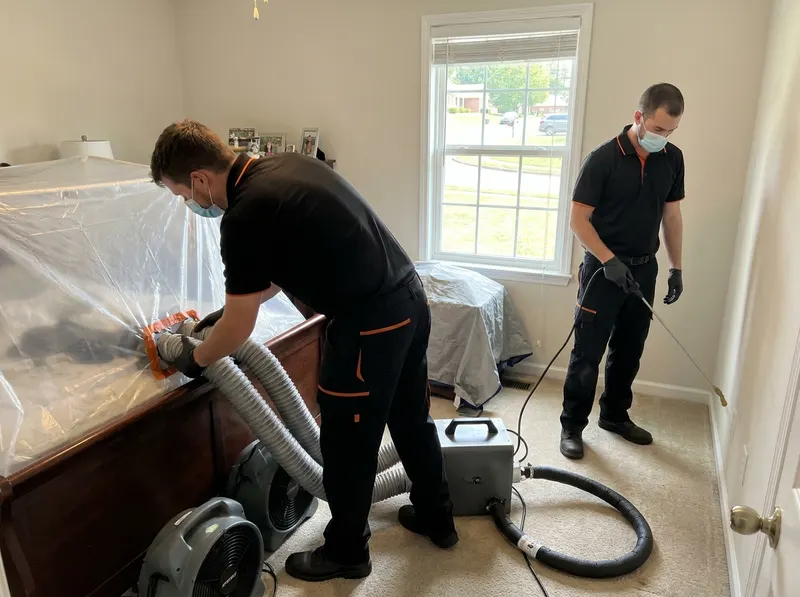
Bed bug heat and chemical remediation in Birmingham, AL establishes definitive territory control against persistent infestations in historic and modern homes. Thermal remediation uses industrial heaters and axial air movers to circulate sustained convective heat between 122°F and 135°F for a minimum of 4 hours, penetrating mattresses, wall cavities, and hardwood subfloors where conventional sprays fail to reach. This temperature threshold denatures cellular proteins in adult bed bugs, nymphs, and embryonic eggs within minutes. Pairing this thermal saturation with targeted chemical perimeter applications creates an impassable barrier; while heat forces insects outward from harborages, the non-repellent residual formulations placed along perimeter tack strips and utility penetrations intercept fleeing stragglers, preventing re-infestation of sleeping quarters.
Housing stock across Jefferson County dictates specific tactical adjustments. Older architectural properties in Highland Park, Forest Park, and Five Points South frequently feature lath-and-plaster walls, multi-layered baseboards, and tongue-and-groove flooring that provide deep insulation for harborages. These structural voids require longer thermal holding cycles to achieve lethal core temperatures. Conversely, modern slab-on-grade construction in Crestline Park or Glen Iris allows rapid thermal transfer but demands meticulous sealing along bottom wall plates to contain insect movement. Properties near damp, shaded microclimates around Red Mountain Park and East Lake experience humidity levels that sustain bed bug longevity; integrating amorphous silica dust behind electrical faceplates provides permanent mechanical desiccation that unaffected humidity cannot degrade.
Operational steps follow a strict three-phase system: 1. Preparation and removal of heat-sensitive items including wax, pressurized canisters, cosmetics, and fine art. 2. Active thermal application monitored by real-time wireless temperature sensors placed in the deepest potential harborages. 3. Precision exterior-facing and baseboard chemical barriers deployed using localized, low-odor products to secure living areas without contaminating indoor airspace. This dual-protocol approach avoids the limitations of heat-only systems (which lack residual protection once cooled) and chemical-only approaches (which frequently miss insulated eggs, necessitating 3 to 4 disruptive follow-up sprays over 6 weeks).
Every job gets a firm, written price after a free on-site visit.
Tell us about your bed bug heat and chemical remediation job in Birmingham and we'll send a clear, written quote, usually the same day.
 Kelvoro Pest Barrier