Pest Control Service Birmingham provides authoritative biological suppression and physical exterior barriers that keep native Alabama pests out of living areas. Standard single-family residential treatments establish a continuous three-foot vertical and three-foot horizontal exterior band to intercept insect vectors before structural entry occurs.
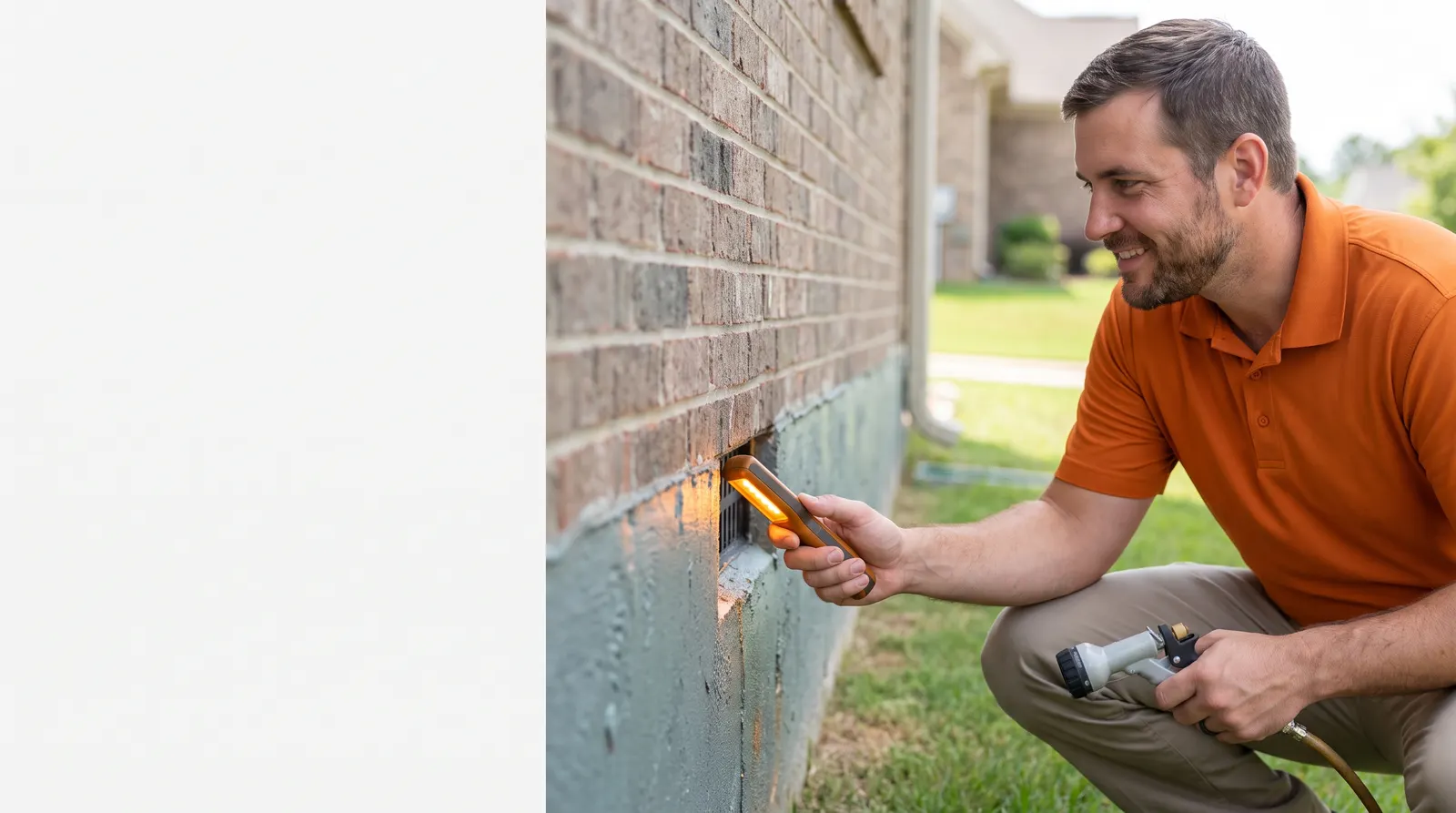
Pest control service in Birmingham is a specialized structural management solution that applies targeted exterior perimeter barriers, subterranean termite defenses, and targeted interior applications across Jefferson County properties.
Every service reflects the same meticulous attention to detail, whether it's a single job or a larger pest control service project across Birmingham.
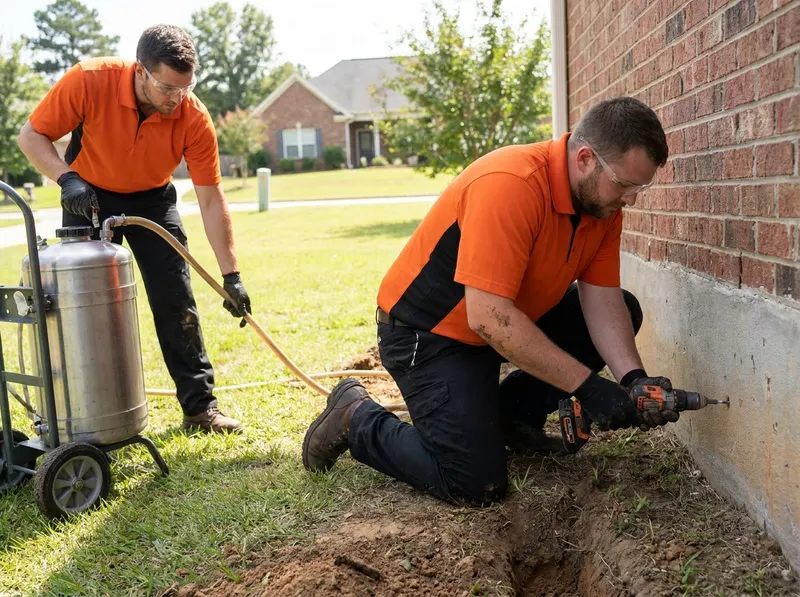
Subterranean termite management across Central Alabama targets Reticulitermes flavipes colonies nesting inside native red clay soils. Treatment protocols utilize continuous perimeter soil trenching measuring 6 inches wide by 6 inches deep, saturating foundation perimeters with non-repellent liquid termiticides at a standard application rate of 4 gallons per 10 linear feet. In structures where exterior masonry or attached concrete patios prevent direct trenching, specialized rod injection drills through slab joints at 12-inch intervals to establish an unbroken sub-slab barrier. Alternatively, tamper-resistant monitoring and bait stations are anchored into soil beds every 10 to 12 feet around the structure perimeter, utilizing chitin synthesis inhibitors that foraging worker termites distribute throughout the subterranean colony to eliminate the reproductive caste and suppress reinfestation cycles.
Get a quote →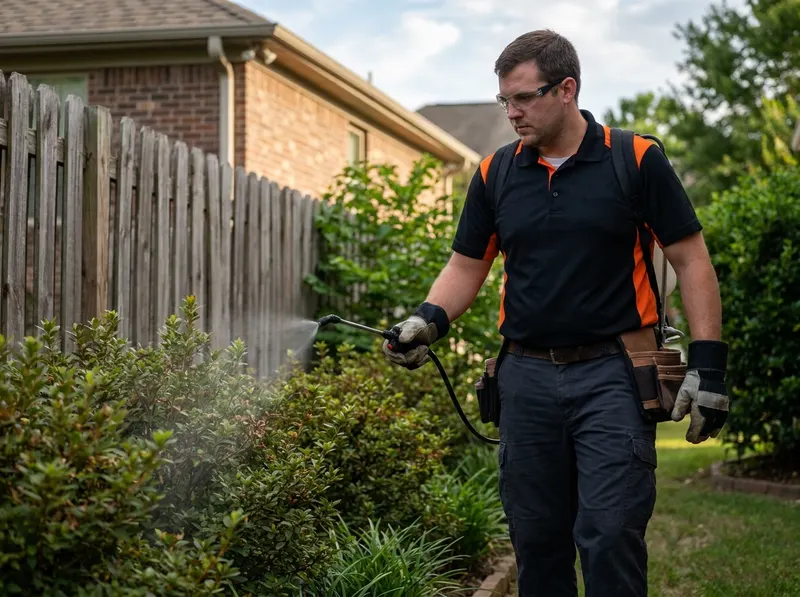
Mosquito control programs operate on an intensive 21- to 30-day treatment cycle active from early May through late September, directly disrupting the adult reproductive lifecycle of Aedes albopictus (Asian tiger mosquito) and Culex species. Specialized backpack misting units apply low-volume micro-encapsulated adulticides and polymeric surfactants directly to dense shaded resting zones, including the undersides of broadleaf deciduous shrubbery, ivy ground cover, ornamental hostas, property fence lines, and low-canopy tree margins up to 10 feet vertically. Technicians systematically inspect standing water sources, treating non-draining landscape basins, decorative fountains, and low swales with biological larvicides containing Bacillus thuringiensis israelensis (BTI) rings or granules, neutralizing mosquito larvae before pupation without altering soil pH or endangering garden vegetation.
Get a quote →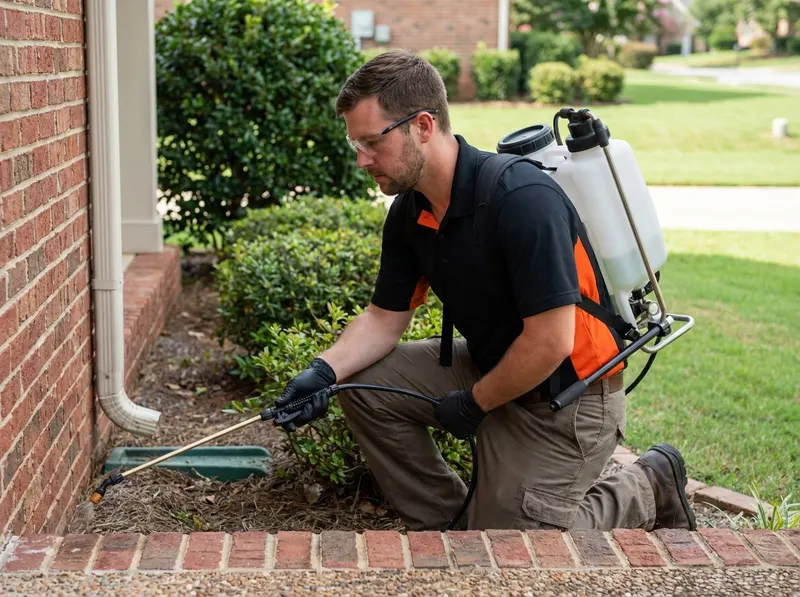
Quarterly perimeter pest maintenance establishes an impermeable, multi-tiered defensive shield around the residential footprint to stop foraging insects long before they reach interior baseboards. Technicians deploy a targeted 3-foot vertical liquid application on the foundation masonry and a 3-foot horizontal soil barrier out from the exterior wall perimeter. The active micro-encapsulated barrier intercepts American cockroaches, smokybrown cockroaches, Argentine ants, field crickets, and centipedes. Protocol steps incorporate mechanical web removal along roof eaves, window headers, and porch soffits up to 15 feet high, paired with granular bait placement in exterior mulch beds, rock gardens, and air conditioning condensation zones to dissolve satellite insect nesting zones away from the primary structure.
Get a quote →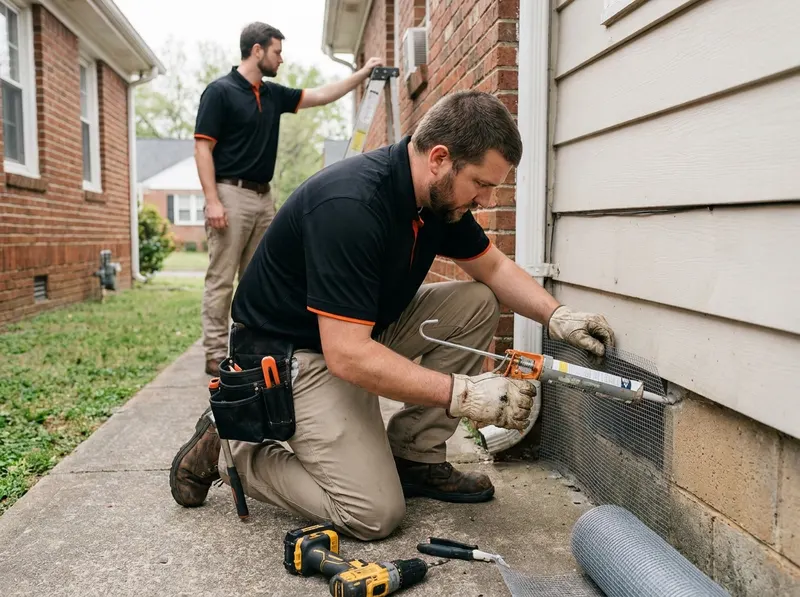
Rodent exclusion provides lasting physical remediation against Rattus rattus (roof rats) and Mus musculus (house mice) that attempt structural entry during fall and winter temperature shifts. The remediation begins with an exhaustive 32-point attic, foundation, and roofline inspection to locate gnaw marks, grease rub tracks, and droppings. Technicians seal all architectural openings, weep holes, crawl space foundation vents, and utility penetrations larger than 0.25 inches using rustproof 16-gauge galvanized steel hardware cloth, stainless steel micro-mesh, structural expanding polyurethane compounds, and copper stuffing. Interior attic pathways receive sanitized mechanical snap-trap runs placed along main joist paths, fully eliminating lingering rodents without using broadcast indoor anticoagulants that cause rodent expiration inside wall cavities.
Get a quote →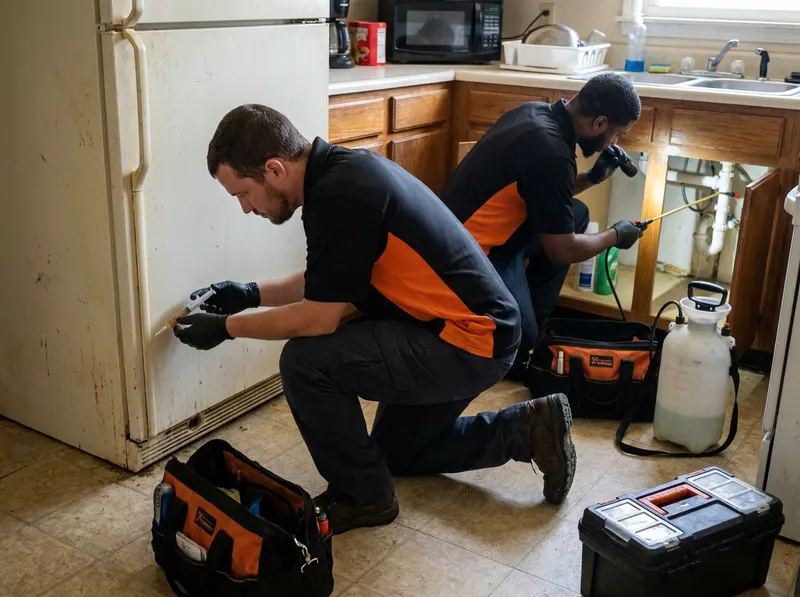
Targeted German cockroach (Blattella germanica) eradication executes a two-phase structural remediation protocol designed to collapse heavy indoor breeding populations within single-family homes and multi-unit residences. The primary remediation phase employs micro-targeted placements of non-repellent gel baits within hidden micro-harborages, including cabinet door hinges, hollow furniture legs, refrigerator compressor compartments, dishwasher pump enclosures, and plumbing chase cutouts. Technicians integrate precision-dosed insect growth regulators (IGRs) that sterilize mature adults and halt nymphal molting stages, breaking the 28-day breeding cycle. Follow-up diagnostic monitoring using adhesive insect traps placed at high-traffic harborage zones precisely measures mortality rates prior to a mandatory secondary booster application scheduled 14 days later.
Get a quote →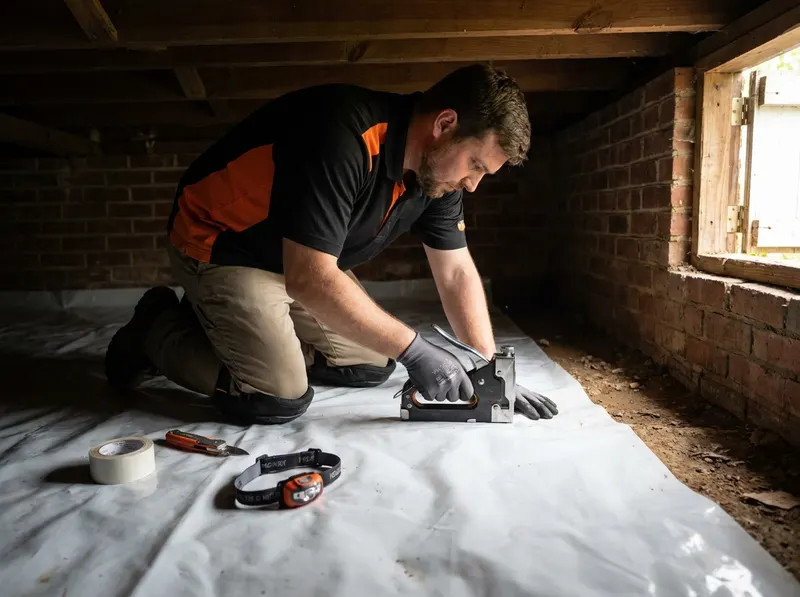
Crawl space encapsulation stabilizes the subterranean subfloor environment against high humidity, biological deterioration, and pest encroachment common to Alabama homes with traditional pier-and-beam foundations. Technicians remove organic debris, mold-laden insulation, and residual insect droppings before rolling out a high-durability, multi-ply 12-to-20-mil puncture-resistant polyethylene vapor barrier across 100% of the exposed earth floor, sealing every joint with moisture-cured seam tape and anchoring 12 inches up foundation piers. The procedure seals perimeter crawl space vents to eliminate humid exterior air ingress and introduces dedicated commercial-grade crawl space dehumidifiers calibrated to maintain relative humidity below 55%, rendering the subfloor entirely uninhabitable for wood-boring powderpost beetles, dampwood termites, and camel crickets.
Get a quote →
Stinging insect remediation safely neutralizes and removes aggressive aerial and structural colonies of Polistes paper wasps, Dolichovespula maculata (bald-faced hornets), and Vespula yellowjackets from residential structures. Technicians equipped with heavy protective bee suits identify primary nesting vectors across second-story soffits, architectural crown molding, chimney caps, exterior brick weep lines, and below outdoor deck framing. Structural void nests undergo direct pressurized injection of fast-acting pyrethroid or botanical dusts that rapidly disperse throughout internal comb chambers to neutralize defending worker populations instantly. Technicians physically detach and dispose of residual nest structures, following with residual repellent applications across adjacent eaves to prevent displaced foragers or subsequent queens from rebuilding on the identical architectural anchor.
Get a quote →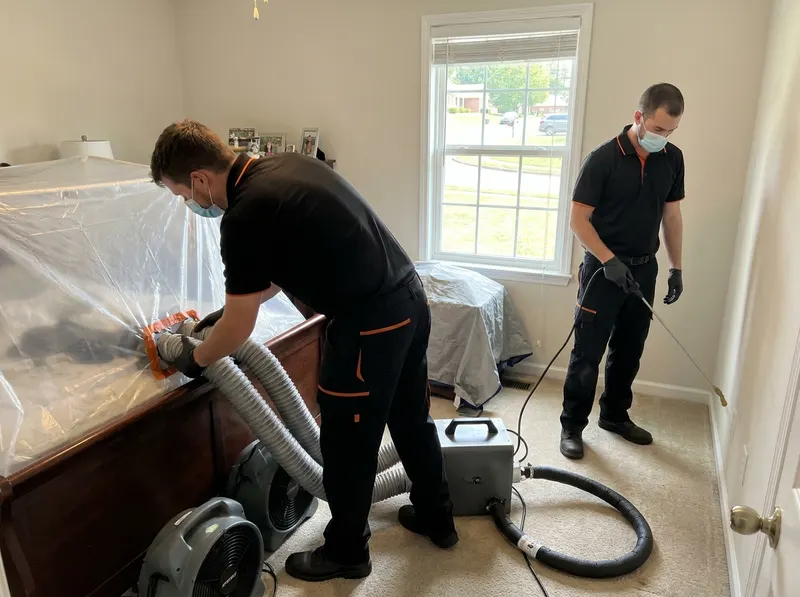
Bed bug (Cimex lectularius) eradication is delivered through an intensive, multi-phase thermal and chemical protocol designed to penetrate deep structural hiding places inaccessible to conventional surface spraying. Structural heating systems elevate ambient room temperatures to a sustained, lethal 125°F to 135°F for a continuous period of 4 to 6 hours, utilizing industrial high-velocity air movers to force lethal convective heat through mattress cores, box spring frames, wall baseboards, and deep electrical outlet voids to eliminate all life stages, including heat-sensitive eggs. High-risk perimeter seams and mattress casing zippers are reinforced with targeted applications of non-repellent dual-action liquid insecticides and desiccant dusts, providing active residual protection that guards against reintroduction.
Get a quote →You get a firm, itemized quote for your pest control service before any work begins, no surprises, no pressure.
Careful prep, tidy work, and a full cleanup when we are done. We treat your home and belongings like our own.
The same trusted, background-checked team from the first call to the final check.
Selecting the right pest management protocol depends on pest biology, structural construction type, and seasonal pressure across North Central Alabama. If you detect live wood damage, mud shelter tubes, or winged reproductive swarms along baseboards between March and May, choose a dedicated liquid termiticide trenching or monitoring station installation. Liquid trenching saturates approximately 4 gallons of termiticide per 10 linear feet down to the footing, creating an impenetrable chemical zone, whereas bait stations placed every 10 to 12 feet provide continuous colony elimination through active ingredient recruitment.
If your household experiences recurring American cockroaches, odorous house ants, or wolf spiders inside living areas, choose a quarterly exterior perimeter defense service. The trade-off between these protocols involves treatment scope and active chemistry: perimeter defense focuses on an exterior barrier that limits indoor pesticide exposure but does not arrest subterranean wood-destroying organisms hidden beneath concrete slabs or inside subflooring. Conversely, specialized termite treatments isolate soil zones and structural foundations but do not eliminate free-flying mosquitoes or web-building spiders in landscaping.
If summer outdoor recreation is disrupted by biting vectors, choose a 21- to 30-day foliar misting program targeting the underside of broadleaf foliage and shaded perimeter vegetation; this suppression program does not replace subterranean crawlspace encapsulation or rodent proofing. For scratching sounds in attics or droppings in crawl spaces during cold fronts from October through January, select comprehensive rodent exclusion, which requires physical masonry and flashing repairs rather than recurring liquid barrier sprays. Property owners balancing whole-structure protection against single-vector infestations often pair a foundation defense barrier with seasonal vector suppression, accepting higher initial operational fees for comprehensive, multi-layered structural security.
If a homeowner manages an older pier-and-beam cottage in historic neighborhoods like Forest Park, crawl space vapor barrier encapsulation and micro-vent screening should precede perimeter liquid spraying, because exposed subflooring with relative humidity exceeding 70% consistently pulls damp-wood pests, powderpost beetles, and camel crickets upward through subfloor expansion gaps regardless of surface applications.
Every project gets a firm, written price after a free on-site visit. Ranges below for orientation.
Tell us about your pest control service job and we'll send a clear, written quote, usually the same day. Or just call and talk to a real Birmingham pro.
(659) 272-4127
Birmingham sits within a humid subtropical climate characterized by heavy annual precipitation averaging over 56 inches and dense deciduous and pine forest cover extending from Red Mountain through the Cahaba River basin. Historic properties in Forest Park and Glen Iris frequently encounter subterranean termites thriving in moisture-retentive red clay soils, alongside native roof rats that use mature water oaks, sweetgums, and overhanging hickory branches to access upper attic dormers and cedar shake soffits. Foundation weep holes in brick-veneer homes across Crestwood North and Avondale serve as direct migration conduits for smokybrown cockroaches during humid summer transitions, requiring physical stainless mesh screens combined with perimeter micro-encapsulated liquid barriers. Properties situated near the rolling limestone ridges of Vulcan Park and Museum or along the shaded valleys of East Lake experience elevated ground moisture that accelerates chemical degradation in exterior soil beds, requiring scheduled perimeter re-applications every 90 days to maintain continuous barrier efficacy against invading Argentine ant supercolonies and wood-destroying beetles.
Free estimates for Birmingham & the surrounding area.
 Kelvoro Pest Barrier